

Legal Writing

By Joan Feldman | 2026
In the legal profession, your written words are a direct reflection of your thinking. Every brief submitted to a judge, every contract provision sent to opposing counsel, and every formal opinion letter delivered to a corporate client acts as a high-stakes test of your professional credibility. Yet, a surprising number of practitioners remain trapped in antiquated habits, burying their strongest arguments under dense walls of text, passive voice, and unnecessary legalese. True mastery of legal writing does not mean making simple concepts sound complicated; it means making complex legal problems look entirely straightforward.
At Attorney at Work, we dissect the technical and stylistic mechanics of elite drafting. The modern bench is busier than ever, and clients possess a lower tolerance for bloated billing hours spent on verbose memos. To survive and excel, your prose must be engineered for readability and impact. Whether you are seeking to draft airtight contractual agreements, write short and persuasive motions, or simply polish your daily professional correspondence, your goal should be absolute clarity from the very first sentence.
Our curated writing toolkits, editing checklists, and formatting blueprints provide the exact structural guidance needed to refine your style, save editing time, and elevate your advocacy.
To ensure your prose consistently commands authority and drives successful results, your editorial development must focus on four essential quadrants:
Eliminating Bloat & Eradicating Archaic Legalese: Traditional legal training often tricks writers into using outdated, rhythmic phrases like heretofore, whereas, and furthermore. These words add zero legal value while severely dragging down reading speeds. Shifting toward modern legal writing habits that prioritize clear, direct phrasing requires actively cutting out conversational padding, choosing active verbs over passive structures, and using plain English wherever possible.
Persuasive Brief Architecture & the Power of Scannability: Judges and clerks rarely read a long motion cover-to-cover in one sitting; they scan it under tight time constraints. If your core argument is buried deep within a dense, five-page paragraph, it will likely be missed entirely. Implementing strategic formatting and structural layouts to make your legal briefs scannable—including the use of descriptive informative headings, short paragraphs, and bulleted lists—ensures your absolute best arguments jump directly off the page.
Airtight Transactional Drafting & Minimizing Ambiguity: In transactional practice, a single misplaced comma, vague modifier, or poorly defined term can instantly trigger multi-million dollar litigation down the road. Precision is your only shield. Developing an impeccable transactional drafting routine that eliminates contractual loopholes helps you build structured agreements that clearly define party obligations, specify exact timelines, and leave absolutely no room for creative misinterpretation.
Rigorous Editing Protocols & Universal Proofreading Checklists: The fastest way to destroy your credibility with a court or a senior partner is to file a document filled with typographical errors, broken citation formats, or mismatched page numbers. Self-editing requires a detached, clinical system. Committing to a multistep legal editing process before hitting submit—such as reading your text out loud, auditing your defined terms in reverse, and running dedicated citation verifications—guarantees a pristine final product.
The ultimate legal writing failure is confusing density with depth. True sophistication lies in brevity. An algorithm can easily pull boilerplate text blocks from an internal template folder, but it cannot craft a beautifully tailored, emotionally compelling narrative arc for a statement of facts, nor can it elegantly pivot a complex statutory interpretation to favor a unique client position.
When you invest intentional time into trimming the fat from your syntax, polishing your layout architecture, and holding your drafts to an unyielding standard of clarity, your written work product becomes your firm’s greatest business development asset. Explore our masterclass columns, brief-writing workshops, and quick editing checklists below to sharpen your red pen.

Teddy Snyder | Supersede is a concise word lawyers love to use, so why do so many get it wrong? Here's the seed of an idea to stop this mistake.
Theda C. Snyder - May 14, 2026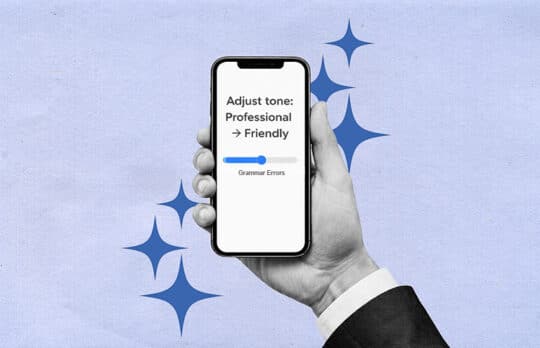
Teddy Snyder: A new app revises your emails to make you seem human. It does this by creating errors. This does not appear to be a joke.
Theda C. Snyder - May 6, 2026
Teddy Snyder | More effective communication with clients starts with understanding you know too much.
Theda C. Snyder - April 21, 2026
Teddy Snyder | Mixing up your adjectives can raise eyebrows at best or muddle your message at worst.
Theda C. Snyder - April 12, 2026
Get to the Point! with Teddy Snyder: Let your passion tumble onto the screen in your first draft. But once that’s out of your system, it’s time to revise. Start with sentence structure.
Theda C. Snyder - April 6, 2026
Teddy Snyder | Today’s the day to celebrate the pinnacle of communication excellence to which all lawyers aspire. It’s National Grammar Day!
Theda C. Snyder - March 4, 2026
Is there a creative bone in your lawyer body? Teddy Snyder has details on the National Grammar Day Poetry Contest. The submission window opens February 15 for 13 days.
Theda C. Snyder - February 2, 2026
What's adultery got to do with it? With apologies to Tina Turner, Get to the Point makes the case for reading more books.
Theda C. Snyder - January 22, 2026
Get to the Point! Don't fear the em dash, says Teddy Snyder. Until the latest brouhaha about differentiating your writing from machine style, you probably used em dashes regularly — and correctly.
Theda C. Snyder - January 7, 2026
Get to the Point! The reason lawyers procrastinate about writing projects, suggests Teddy Snyder, is that we're afraid to be stupid. Here's how to get over it.
Theda C. Snyder - December 3, 2025