


Lawyer Skills

By Joan Feldman | 2026
Knowing the law cold used to be enough. Not anymore. Today, being a great lawyer takes more than memorizing precedents and dissecting case law. The attorneys who thrive are the ones who combine sharp legal minds with real empathy, strong tech habits, and simple, everyday competence.
At Attorney at Work, we’ve always believed that getting better at your job isn’t a one-and-done event—it’s a daily habit. The small choices you make every single day—the tone of your emails, how deeply you listen to a client, or how well you navigate the tools on your screen—are what actually shape your career. Whether you’re a first-year associate trying to keep your head above water or a managing partner adapting to a fast-moving profession, honing these core skills is what turns a transactional attorney into a trusted advisor.
We’re here to give you practical, sensible advice you can actually use today to sharpen your practice, serve your clients better, and enjoy the work a little more along the way.
To build a high-performing, resilient skill set in today’s legal environment, attorneys must focus on four foundational areas:
Legal Writing & Real Communication: Words are your stock-in-trade, so make them count. Good legal writing isn’t about sounding fancy; it’s about clarity, structure, and understanding what the person reading your work actually needs. Whether you’re letting ideas flow freely in an early draft or realizing when digital grammar tools make you sound too artificial to connect with clients, mastering your tone across every email and brief is non-negotiable.
Adaptability & Resilience: Very few legal careers follow a straight, predictable path these days. Thriving for the long haul means staying flexible instead of getting boxed in. When you look at your core strengths—persuasion, clear thinking, problem-solving—as portable tools in your toolkit, you can handle unexpected pivots and build a career that actually lasts..
In an age where AI can draft a contract in seconds, it’s easy to think professional development is just a list of tech shortcuts and hacks. But real professional mastery can’t be downloaded or installed overnight. The qualities that make clients trust you—empathy, absolute reliability, and a obsession with getting the details right—are built over time through intentional practice.
When you take pride in mastering the small details of your craft, from the layout of a brief to the tone of a tough conversation, you aren’t just doing better work—you’re future-proofing your career. Explore our latest practical guides and expert tips below to keep building the habits that set you apart.
Teddy Snyder | Don’t be tempted to use a fancy word when a plain one will do.
Theda C. Snyder - June 14, 2022
Get to the Point! Don’t you hate it when something comes out of your mouth that makes your listener hesitate or give you a funny look?
Theda C. Snyder - June 14, 2022
Analog Attorney | Keeping a commonplace book helps you be more interesting.
Bull Garlington - June 13, 2022
The first post in our new series with rules, optional techniques and simple suggestions to remind you that strong writing makes you a better lawyer.
Josh Taylor - June 10, 2022
Euphemisms are words or phrases used in place of other words that might offend the recipient of the message. The prefix eu- means “good.” Euphemisms substitute good language for what some might consider bad. Sometimes the communicator is ...
Theda C. Snyder - May 30, 2022
Chris Graham | Have you noticed that the way you read websites, emails, text messages — even magazine and news articles — has changed over time?
Chris Graham - May 29, 2022
Gerry Riskin | Although certain things clients say are sure to get your dander up, I respectfully suggest you put the sword away and resist the impulse to parry and thrust.
Gerry Riskin - May 28, 2022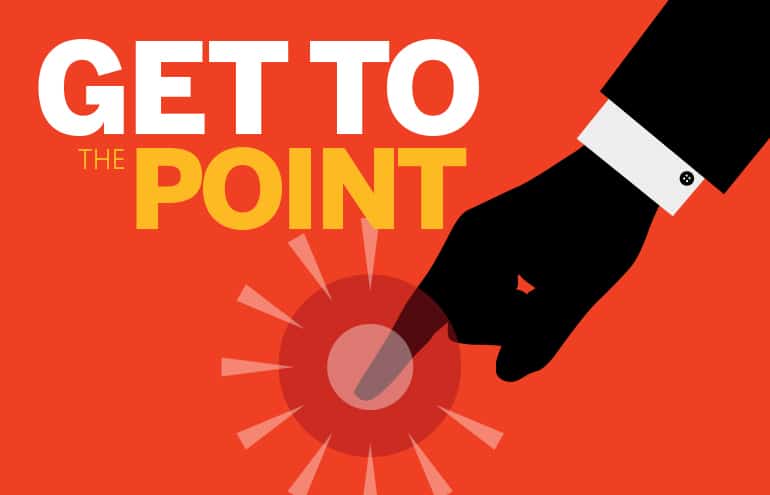
Are you a James Corden fan? One of the games he plays on "The Late Late Show" is Emoji Headlines.
Theda C. Snyder - May 28, 2022
Gray Robinson | Unfortunately, the art of persuasion isn't taught in many law schools. Here are six fundamentals.
Gray Robinson - May 28, 2022
Oh, don’t act so shocked. You know most lawyers suck at listening. The question is, how to get better.
Annie Little - May 27, 2022