


The benefits of creative practice for lawyers aren’t based on the size of your commitment or what you produce. The benefits come from repetition — consistently showing up, even for five minutes at a time.

Most lawyers I talk to about creative practice say some version of the same thing: “That sounds great. I’ll start when things calm down.”
I get it. Legal practice runs on bursts of intensity. In your busiest times (and let’s face it, that’s most of the time), it’s hard to imagine adding one more thing, even something restorative, to an already full plate. So the plan becomes to wait for a quieter month, a finished trial, a slower season. Once things settle, you tell yourself, there will be time and energy for the painting, the guitar lessons, or the garden.
The problem is that things rarely settle for long. Waiting for the right moment to begin a creative practice usually means never beginning one at all.
Consistency Beats Inspiration Every Time
I understand the instinct, because it’s the same one that shapes so much of how lawyers work. We’re trained to commit fully or not at all.
If you’re going to do something, you do it properly, with the right amount of time and focused attention. Half measures feel like a waste of the effort it took to start. So a creative practice made up of 10 scattered minutes here and there can feel almost pointless next to the idea of a real hobby, with real hours set aside for it.
But that instinct is getting in your way. The benefit of creative practice for lawyers doesn’t come from the size of the commitment or, as I said in last month’s article, the polish of your final product. It comes from repetition.
The Science Behind Making Habits Stick
Researchers who study habit formation find that consistency, not intensity, is what makes an activity automatic. In one widely cited study out of University College London, researchers tracked how long it took participants to build a new behavior into their daily routine to the point that it happened without conscious effort. The median time to reach that point, called “automaticity,” was 66 days, though individual results ranged widely depending on the person and the behavior involved. Across the research, one pattern held: simpler, smaller actions became automatic faster than larger, more demanding ones.
That finding tells us if your goal is to make something stick, a small, repeatable action beats a large, occasional one almost every time. Fifteen minutes of sketching three times a week will become part of how your brain works far faster than a single ambitious Saturday spent trying to master watercolors.
This is also, not coincidentally, the same principle behind making changes stick inside a law firm. The improvements that hold aren’t the sweeping, 12-month overhauls mapped out on a whiteboard in January and erased by the end of February. They’re the small, specific, repeated actions: reviewing one workflow a week, delegating one task at a time, checking in with one team member consistently instead of everyone sporadically. Consistency does work that intensity can’t.
The Goal Is Consistency, Not Perfection
There’s a second benefit to building a creative practice this way. When the commitment is small, it removes the pressure that makes lawyers avoid creative activity in the first place. There’s no need to be good at it, no need to finish anything, and, most importantly, no need to find a large enough window of time to feel like the effort was worthwhile. A five-minute practice can’t fail. It can only happen or not happen.
I do a 100-day art challenge every year, as I’ve written about in this series before. One hundred days in a row where I paint or sketch for however long I can manage. What I’ve noticed, after several years of doing this, is that the days matter more than the minutes. A day where I paint for five minutes still counts. A day where I skip it entirely breaks the momentum, but I know life can get away from us sometimes, so I don’t beat myself up over it.
I just start again the next day.
The habit is built by showing up, not by how much gets produced once you do.
If you’ve been telling yourself you’ll start a creative practice once things calm down, consider trying the opposite approach instead. Pick something small enough that skipping it would feel a little silly: five minutes of doodling, one verse of a song you’re learning, 10 minutes pulling weeds. Do it most days. Not perfectly. Not for very long. Just consistently.
You’re not building a hobby you’ll be good at right away. You’re building a habit that will still be there, giving you space for your best thinking, on the days you need it most.
Catch up on Karen Skinner’s Lawyer Creativity Series
“The Law Firm Productivity Myth That’s Burning Lawyers Out”
“Why Your Brain Needs Creative Rest (and What That Actually Looks Like)”
“Did You Know Being a Terrible Guitar Player Could Make You a Better Lawyer?”
More Healthy Lawyer Productivity Tips
- Micro-Recovery: 5 Small, Realistic Ways to Reduce Stress During a Busy Workday
- How Doodling Makes You a Better Listener (and 3 More Benefits)
- Delegation Isn’t Just a Work Hack, It’s a Life Hack: 5 Personal Tasks to Delegate Now
- Got a Process for Your Processes? Create Law Firm SOPs in 5 Easy Steps
- Why Lawyers Need Boredom
- Indoor Fitness Tips for Attorneys With Busy Schedules
- Why Are You at the Office Until 10 p.m.?
- Top-Rated Mindfulness and Meditation Apps
- How to Be Productive When You’re Depressed
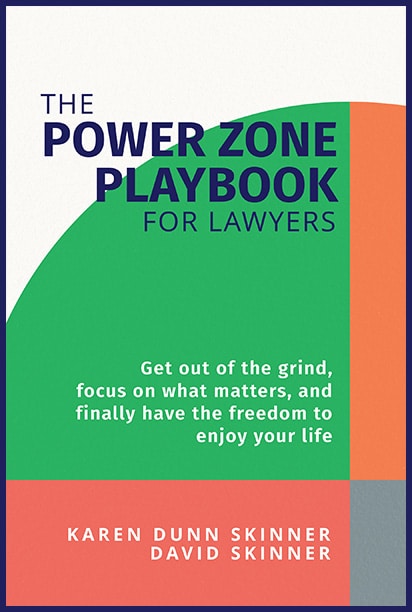
Get the Power Zone Playbook for Lawyers
By Karen Dunn Skinner and David Skinner
Get out of the grind and into your power zone! Learn to align the work you do with the work you love, finding the sweet spot where your expertise, passion, and client needs intersect. It’s here, in your Power Zone, that you will discover the secret to a thriving practice.
Everything you need is in your Playbook.
Images © iStockPhoto.com