


Communications Skills

By Joan Feldman | 2026
In the legal industry, words are not merely a means of casual expression—they are the primary instruments of your trade. Every sentence structure you construct, every oral argument you deliver, and every client email you finalize carries immediate professional and financial consequences. Yet, the traditional educational system routinely rewards dense, overly academic writing and technical legalese that fails to translate to the real world. Elevating your daily operations requires developing exceptional lawyer communication skills that prioritize active clarity, profound brevity, and an intentional command over both your written and spoken delivery.
At Attorney at Work, we dissect the fundamental mechanics of professional interactions for high-performing practitioners. Whether you are seeking to command a courtroom, eliminate internal friction with your associates, or build deeper psychological safety during client consultations, your habits must feel authentic, clear, and focused on the listener’s perspective. In an era dominated by rapid digital noise and automated text feeds, an attorney who possesses the rare ability to cut through the fluff and speak with true eloquence holds an unmatched competitive advantage.
Our curated tutorials, editorial writing checkups, and oral presentation guides provide the structural framework needed to sharpen your communication toolkit and transform your practice.
To ensure your interaction strategies command authority, protect your reputation, and drive successful client outcomes, focus on four developmental quadrants:
Eloquent Oral Advocacy & Intentional Speech Cadence: Delivering a powerful professional message requires looking past mere text to master your physical vocal mechanics. True eloquence requires weeding out conversational filler. Understanding the habits of eloquent speakers who treat every word as an important asset—such as controlling unconscious gestures, respecting your timeline, and speaking at a deliberate pace of two to three words per second—ensures your arguments command absolute respect from judges and colleagues alike.
Empathetic Client Onboarding & Overcoming the Knowledge Curse: The moment a practitioner achieves deep subject-matter expertise, they often fall prey to a subtle cognitive trap: forgetting what it feels like to be completely new to the legal system. Bridging this communication gap is essential to building lasting trust. Learning how to navigate the curse of knowledge to ensure effective client communication helps you break down complex corporate or litigation concepts into accessible, clear timelines that calm anxiety and prevent misunderstandings.
Polished Written Professionalism & Digital Etiquette: With the vast majority of daily interactions shifting into digital channels, a single typo, messy punctuation block, or overly aggressive sentence can permanently erode a hard-earned professional boundary. True digital civility is built on meticulous execution. Implementing standard email communication guidelines to balance friendly tone with formal structure—including clear action requests, precise proofreading protocols, and intentional subject lines—protects your authority across every inbox.
Nonverbal Communication Secrets & Strategic Negotiation Flow: True negotiation leverage isn’t built on loud confrontational tactics; it is achieved by establishing an immediate, subconscious feeling of ease and connection with your counterpart. Your physical presence speaks volumes before you ever open a file. Deploying specific body language tips to get to a mutual agreement faster—such as subtly matching speech cadences, mirroring movements, and addressing people at non-confrontational angles—helps defuse high-stress interactions and keeps negotiations moving smoothly.
The ultimate differentiator for a modern advocate is human alignment. Anyone can pull standard contract templates from a software database, but an algorithm cannot look a grieving client in the eye, decipher the hidden emotional subtext behind a tense corporate boardroom negotiation, or pivot an oral argument based on a judge’s real-time physical reactions.
When you invest intentional time into refining your written syntax, mastering your vocal delivery, and practicing true, active listening, you transform your daily interactions into a masterclass in professional authority. Explore our comprehensive columns, syntax guides, and interactive checklists below to unlock the full power of your voice.
Why do law firm administrators look for strong lawyer communication skills when hiring new associates? Administrators and managing partners prioritize these abilities because associates serve as the primary written and oral representatives of the firm’s brand. An associate who relies on vague, passive language, writes cluttered emails, or uses excessive vocal fillers like “like” or “um” can weaken the firm’s credibility in front of clients, opposing counsel, and judges, directly impacting case conversion and overall retention rates.
How can an attorney improve their lawyer communication skills to overcome “the curse of knowledge”? To overcome the curse of knowledge, an attorney must consciously strip away technical legal jargon, statutory citations, and internal shorthand abbreviations when speaking with clients. Instead, practitioners should explain foundational legal procedures using clear analogies, utilize short sentences, encourage active question-and-answer exchanges, and explicitly ask the client to confirm their understanding of the immediate next steps to ensure complete clarity.
What percentage of professional legal communication is nonverbal during high-stakes negotiations? Behavioral and communication studies indicate that up to 55% of meaning and connection is conveyed via visual body language, 38% is derived from vocal tone, pacing, and pitch, and only 7% is determined by the literal words spoken. Because of this massive disparity, attorneys who learn to consciously manage their physical positioning, eye contact, and vocal cadence can control high-stress negotiation rooms far more effectively than those who rely solely on textual arguments.

Get to the Point | Short paragraphs produce more readable documents.
Theda C. Snyder - July 4, 2026
How do you say thank you after a job interview or follow up after a promising client meeting? How do you express appreciation for a mentor’s advice, or thank someone for a solid referral? Gratitude is the coin of the realm when it comes to ...
Bull Garlington - June 24, 2026
Teddy Snyder | Sometimes you just run out of ways to say somebody’s trying to peddle a lie, but a real advocate never runs out of the right vocabulary.
Theda C. Snyder - June 24, 2026
Learning how to delegate effectively is a critical skill for scaling your law practice. Use our simple three-step matrix to evaluate your tasks, choose the right team members, and master communication parameters.
Yuliya LaRoe - June 17, 2026
With all the digital noise out there, a perfectly addressed envelope is a rare act of civility—and a professional power move. Whether you’re sending a formal demand letter or a handwritten thank-you, the details matter (and no, your "doctor's ...
Bull Garlington - June 11, 2026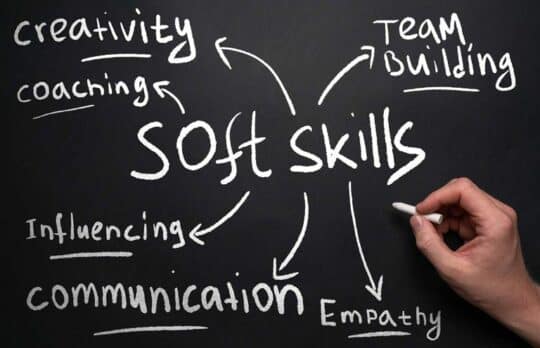
Bull Garlington | The most important soft skill of them all.
Bull Garlington - June 5, 2026
You're sure you explained everything clearly, but was the message received? Follow Teddy Snyder's tips to make sure your clients really hear you, absorb your advice and act on it correctly.
Theda C. Snyder - June 4, 2026
You can get to an agreement much more easily when you master a few modern communication techniques—from in-person angling to virtual camera framing—to create ease and trust across a physical table or a Zoom grid.
Traci Brown - June 3, 2026
A growing body of research suggests that reading fiction increases your capacity for empathy. The basic idea is that imagining the emotional world of fictional characters is good practice for empathizing with actual humans. For example, have you ...
Chris Graham - June 2, 2026
Ask the Experts: Expert advice on staying calm during an operational emergency, running effective tabletop simulations, and knowing exactly when to bring in a legal public relations specialist.
Katherine Hollar Barnard - June 1, 2026