


Few of us can create the perfect document the first time around. In fact, there is probably no writing that cannot be improved. Going over your draft before transmission will inevitably generate a few — or many — ideas for revising and editing.
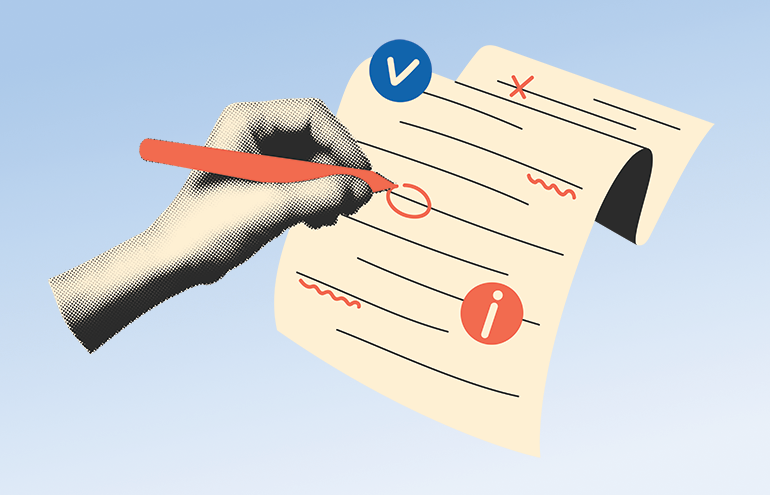
Tips for Revising and Editing Legal Writing
You can think of the difference between revising and editing like the difference between remodeling and redecorating a building. Remodeling may be as drastic as destroying the interior for a complete rebuild, or it might involve building an addition. Redecorating, on the other hand, leaves the basic structure as is but changes interior design elements.
Revising
Outlining is important. Before you start drafting, create a list of the points you want to make. This doesn’t have to be in a real outline form. Notes are fine. You can jot your ideas on a legal pad or tap them into your phone.
You may be using the traditional IRAC setup: Issue, Rule, Application/Analysis, and Conclusion. Defining the issue so it must logically be answered in your favor is critical. But how you structure your argument in the Analysis section is where excellent text organization can shine.
Get To the Point has repeatedly preached the importance of putting your best foot forward. In other words, lead with your strongest arguments. Look over your notes and move the ideas around for greatest impact. Actually numbering them can be helpful at this stage.
Don’t be reactive. Just because your opponent presented their arguments in a certain order doesn’t mean you have to follow that structure, which is likely not in your favor. You do have to respond to your opponent’s points, but you can do so in a way to stress that they are not determinative.
Once you have your arguments in order, just let your fingers go. Say everything you have to say about each point. Once you have it all on your screen, you might change your mind about which are the strongest contentions. For example, among equally important discussions, you might want to prioritize the ones backed by the most persuasive precedents, such as those from your own jurisdiction rather than from another state.
As you write, you will undoubtedly do some editing along the way. That’s fine, but to start, the most important actions are to record all your arguments in the strongest way and revise as needed.
Editing
Now it’s time to edit and tighten up your writing. Even if you are within a court-mandated word or page count, a more concise delivery will make your sentences more powerful.
Look for ways to substitute strong verbs for weak verb/noun structures. For example, use “tend” instead of “have a tendency” and “depose” instead of “take the deposition of.” Use a thesaurus to choose the most accurate word.
Active voice verbs are stronger than passive voice ones. Don’t try to get fancy; use simple, modern language. Many adjectives and adverbs add nothing; dump them.
White space makes your text more readable. If you can stay within the page limit, keep your paragraphs short. Use bullet points for clarity.
The Finishing Touch
Use your spelling and grammar checker to catch basic errors like typos, punctuation mistakes, and double words. You don’t have to accept every suggestion. Not every one is accurate. This is especially true if you are using unusual words or words that might be singular or plural depending on context.
Try reading your document aloud. It’s a good way to catch errors. Hearing another person read it aloud is also helpful.
If possible, let your last version stay on the computer overnight. A significant time lapse can help you see the need for further changes.
Before you send off your masterpiece, double-check the accuracy of identifying information such as party names and case number. Make sure you have the correct spelling for the recipient’s name and address.
Now that revising and editing is done, start preparing for the hearing or meeting while everything is fresh in your brain.
More Tips for Drafting and Editing Legal Writing
Find more good ideas for improving your legal writing and communications skills in “Get to the Point” by Teddy Snyder.
Subscribe to Attorney at Work
Get really good ideas every day for your law practice: Subscribe to the Daily Dispatch (it’s free).
Image © iStockPhoto.com